
Bunker Roy , the Indian social activist who founded Barefoot College and trained village grandmothers as solar engineers , died on 10 November 2026 at his home in Tilonia, Rajasthan, aged 81. Born into privilege in Bengal in 1945, he attended two of India’s most elite institutions and was a national squash champion before choosing village life. He received the Padma Shri, one of India’s highest civilian honours, in 1986, and Time named him among the 100 most influential people in 2010. His wife, Aruna Roy, a former civil servant who led the movement behind India’s Right to Information Act , survives him.
Bunker Roy turned down a conventional career to build Barefoot College in a Rajasthan villageAccording to Clean Technica, Roy’s life changed course when he saw rural poverty first-hand during the Bihar famine of the mid-1960s. Roy told the TEDGlobal audience in Edinburgh in 2011 that his mother was so shocked when he said he wanted to live and work in a village that she stopped speaking to him for a long time. He also said his own expensive, elitist education had almost destroyed him.
In 1972 he settled in Tilonia and founded the Social Work and Research Centre, which later became known as Barefoot College. Its rules turned conventional education upside down: anyone with a university degree was disqualified from studying there, and no degrees were awarded. Roy said in 2011 that nobody at the college earned more than $100 a month.
The campus was built in 1986 by a dozen local barefoot architects who could not read or write, and it went on to win an Aga Khan Award for Architecture. At the college’s night schools, children aged 6 to 14 elect their own prime minister and cabinet. Roy’s guiding conviction was that “there is no urban solution to a rural problem”. 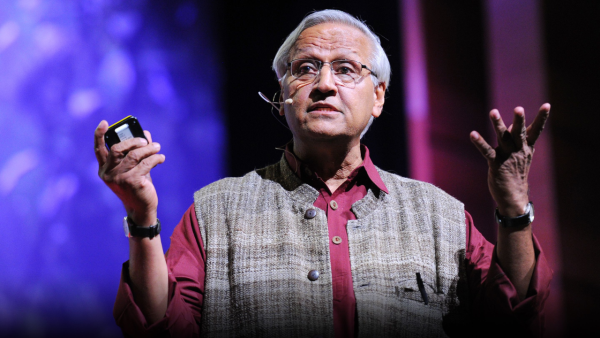
How village grandmothers became solar engineers in six months and lit homes in their own villagesThe programme took illiterate grandmothers from poor rural villages and trained them at the college for six months. They then returned home to install and maintain full solar lighting systems. Roy deliberately chose grandmothers because they are rooted in their communities, while men and younger people, he found, were more likely to take their new skills and leave for the city.
Roy told the TED Global audience in 2011 that much of the training relied on sign language and hands-on practice, because the women shared no common language.
Malaysia’s first solar mama, Tarihing Masanim, from Kampung Sonsogon Magandai near Kota Marudu in Sabah, finished her training in India in 2015. She returned to bring electricity to around 100 homes in her village. Roy also liked to tell the story of a 55-year-old Afghan grandmother who electrified 200 houses and corrected the head of an Afghan engineering department on the difference between alternating and direct current.
Barefoot College’s impact, light for over a million people and 70 billion litres of rainwaterCleanTechnica reports that, by the college’s own count at its 50th anniversary in 2022, it had trained 1,708 illiterate and semi-literate rural women from 96 countries as solar engineers. Their work had brought light to more than a million people in over 75,000 households and saved about 45 million litres of kerosene.
Its rainwater harvesting had captured some 70 billion litres and brought safe drinking water to more than 1,650 schools. More than 90,000 working children had studied in its night schools, and its barefoot health workers had treated over 300,000 patients.
Roy said the college redefined professionalism. He argued that water diviners, traditional midwives and bone setters are professionals who combine competence, confidence and belief, and that their knowledge deserves a place in the mainstream.
Contact to : xlf550402@gmail.com
Copyright © boyuanhulian 2020 - 2023. All Right Reserved.