There was a time when using a phone to access banking services felt like a significant advantage. Today, it is simply part of the expected experience.
India's digital payments ecosystem has played a major role in resetting those expectations. According to the Ministry of Finance, UPI processed more than 24,000 crore transactions worth around ₹314 lakh crore in FY2025-261. The scale is important, but what is also significant is what it has taught consumers: digital transactions can be immediate, accessible and available whenever they are needed.
And that expectation does not stop at payments. Customers increasingly expect the same ease when they check their finances, move money, manage a credit card, invest, open a deposit or access a loan. The question for banks is therefore no longer simply “Do you have a digital channel?” but “How much easier does that channel make banking?”
A customer may think about paying a bill, putting aside a surplus, tracking spending or planning a purchase. They are less likely to think about whether the action belongs to deposits, cards, investments or payments, and rightly so; it is not their domain.
Digital banking has the opportunity to reflect this reality.
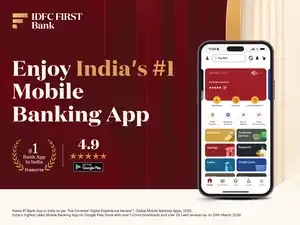
IDFC FIRST Bank's mobile banking app is an example of this broader approach. The app brings together over 300 banking services, spanning everyday tasks such as opening a savings account, payments and UPI, deposits, investments, credit cards, loans, bills and other financial needs. Features such as universal search, spending categorisation, linked accounts and mutual fund access are designed to make different parts of the customer's financial life accessible from one place.
The significance is not simply that customers can do more things from a phone. It is that the phone is becoming a single access point for more of the financial decisions that happen throughout the day.
The Department of Financial Services reported that digital payment transactions increased from 2,071 crore in FY2017-18 to 22,831 crore in FY2024-25, with UPI accounting for 81% of retail payment transactions by volume in FY2024-252.
This level of familiarity with instant digital transactions changes the benchmark for other financial services.
A customer who can make a payment in seconds may reasonably expect opening a deposit, managing a card or checking an investment to feel equally straightforward. The expectation is no longer simply that a bank should offer a service digitally. It is that the digital experience should eliminate unnecessary steps and friction from accessing it.
That is a fundamentally different challenge.
It can mean not having to remember where a particular service sits. It can mean seeing relevant information without searching for it. It’s being able to move between different financial needs without repeatedly entering information or switching platforms.
This is where the distinction between digitising banking and redesigning the banking digitisation becomes important.
Simply putting a branch process onto a screen does not necessarily make it convenient. The more meaningful opportunity is to rethink the journey from the customer's perspective and remove the friction that existed in the first place.
As banking apps expand, customers need a way to navigate that breadth without having to understand the bank's internal product structure. Search, personalisation, clear navigation and contextual recommendations can become as important as the services themselves.
A well-designed digital experience should allow a customer to start with a need rather than a product.
Someone who wants to manage monthly spending should be able to find the relevant tools without knowing what the bank calls them. Someone with surplus funds should be able to discover appropriate ways to save or invest. Someone preparing for a large purchase should be able to explore relevant credit options without beginning the journey from a branch-style product menu.
The underlying principle is simple: the customer should not have to become an expert in the bank to use the bank.
India has already established that financial transactions can happen digitally, quickly and at enormous scale. The next opportunity is to make the broader financial relationship work with the same sense of ease.
That will require banks to think beyond individual digital products and towards connected journeys, where payments, savings, investments, credit and money management can work together without creating additional complexity for the customer.
The app itself will become less important as a novelty. What will matter is what it enables.
When every bank has an app, digital banking will no longer be differentiated by being digital. It will be differentiated by how naturally it fits into the way people actually manage their money.
References:
India's digital payments ecosystem has played a major role in resetting those expectations. According to the Ministry of Finance, UPI processed more than 24,000 crore transactions worth around ₹314 lakh crore in FY2025-261. The scale is important, but what is also significant is what it has taught consumers: digital transactions can be immediate, accessible and available whenever they are needed.
And that expectation does not stop at payments. Customers increasingly expect the same ease when they check their finances, move money, manage a credit card, invest, open a deposit or access a loan. The question for banks is therefore no longer simply “Do you have a digital channel?” but “How much easier does that channel make banking?”
What should a mobile banking app actually do?
The answer starts with recognising that people do not think about their finances in terms of banking departments.A customer may think about paying a bill, putting aside a surplus, tracking spending or planning a purchase. They are less likely to think about whether the action belongs to deposits, cards, investments or payments, and rightly so; it is not their domain.
Digital banking has the opportunity to reflect this reality.
IDFC FIRST Bank's mobile banking app is an example of this broader approach. The app brings together over 300 banking services, spanning everyday tasks such as opening a savings account, payments and UPI, deposits, investments, credit cards, loans, bills and other financial needs. Features such as universal search, spending categorisation, linked accounts and mutual fund access are designed to make different parts of the customer's financial life accessible from one place.
The significance is not simply that customers can do more things from a phone. It is that the phone is becoming a single access point for more of the financial decisions that happen throughout the day.
Why is digital banking becoming more than digital transactions?
The evolution of India's digital payments ecosystem provides a useful backdrop.The Department of Financial Services reported that digital payment transactions increased from 2,071 crore in FY2017-18 to 22,831 crore in FY2024-25, with UPI accounting for 81% of retail payment transactions by volume in FY2024-252.
This level of familiarity with instant digital transactions changes the benchmark for other financial services.
A customer who can make a payment in seconds may reasonably expect opening a deposit, managing a card or checking an investment to feel equally straightforward. The expectation is no longer simply that a bank should offer a service digitally. It is that the digital experience should eliminate unnecessary steps and friction from accessing it.
That is a fundamentally different challenge.
What makes digital banking convenient?
Convenience is often reduced to speed. But a genuinely useful digital banking experience has to solve for more than the number of seconds it takes to complete a transaction.It can mean not having to remember where a particular service sits. It can mean seeing relevant information without searching for it. It’s being able to move between different financial needs without repeatedly entering information or switching platforms.
This is where the distinction between digitising banking and redesigning the banking digitisation becomes important.
Simply putting a branch process onto a screen does not necessarily make it convenient. The more meaningful opportunity is to rethink the journey from the customer's perspective and remove the friction that existed in the first place.
Does more functionality make a banking app better?
Not necessarily. What matters is how well that functionality works together.As banking apps expand, customers need a way to navigate that breadth without having to understand the bank's internal product structure. Search, personalisation, clear navigation and contextual recommendations can become as important as the services themselves.
A well-designed digital experience should allow a customer to start with a need rather than a product.
Someone who wants to manage monthly spending should be able to find the relevant tools without knowing what the bank calls them. Someone with surplus funds should be able to discover appropriate ways to save or invest. Someone preparing for a large purchase should be able to explore relevant credit options without beginning the journey from a branch-style product menu.
The underlying principle is simple: the customer should not have to become an expert in the bank to use the bank.
What will differentiate digital banking in the future?
The first phase of digital banking was about access. The next phase is about experience.India has already established that financial transactions can happen digitally, quickly and at enormous scale. The next opportunity is to make the broader financial relationship work with the same sense of ease.
That will require banks to think beyond individual digital products and towards connected journeys, where payments, savings, investments, credit and money management can work together without creating additional complexity for the customer.
The app itself will become less important as a novelty. What will matter is what it enables.
When every bank has an app, digital banking will no longer be differentiated by being digital. It will be differentiated by how naturally it fits into the way people actually manage their money.
References:
- https://www.pib.gov.in/PressReleasePage.aspx?PRID=2302664
- https://www.pib.gov.in/PressReleasePage.aspx?PRID=2213154