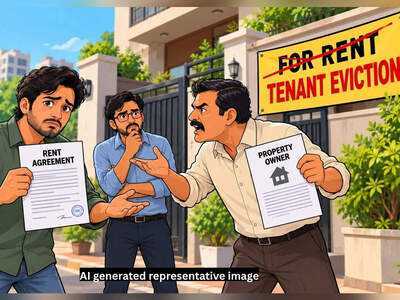
Tenant evicted as unregistered rent agreement fails
The Madras High Court recently ruled that a tenant who lives in a property on the basis of an unregistered rent agreement signed with the property owner’s brother, must show proof of a landlord-tenant relationship. Without this proof, the tenant is simply an unauthorised occupant, and won’t get protection against .
This judgement came from a case filed by Mr Durai, a tenant from Kanthasamy Vathiyar Street, Tamil Nadu who sought an injunction stopping the property owner from evicting him. Before this court case, the situation had already escalated to involving the police since the property owner and his sons had gone to the tenant’s home and damaged trees there on December 6, 1989.
At that time, the Dharmapuri Police Station had told them to take the matter to court and the tenant did so. The Madras High Court judgement came on September 21, 2026. The tenant lost the case.
However, there is another side to this story. The property owner, Mr Sadasivam, has a different version. First, let’s look at the family tree. There were four brothers:
Also read:
(Ironically, the property owner’s family was also entangled in a title dispute case, as a fight had broken out between Sadasivam and his three brothers about who owns this property. Basavaraj's sons claimed that the entire property belonged to them, while Sadasivam claimed it as his own. Duraisamya and Sidhanandan supported Basavaraj’s son. Ultimately, on March 18, 2026, the Madras High Court ruled in Sadasivam’s favour.)
Coming to the case, Sadasivam’s lawyer (Advocate A.Arun Anbumani) told the Madras High Court that the so-called unregistered rent agreement, on the basis of which the tenant claimed the property, was inadmissible as evidence since Sidhanandam himself had ‘permissive possession’ and had no right to rent it out to anyone. Sadasivam’s lawyer told the court that an unlawful occupier cannot seek injunction against its true owner.
Permissive possession means you are permitted to live in the property by the owner due to some reason, but this does not mean you own the property. It simply means that you can live there with the owner’s permission.
On September 21, 2026, the tenant lost the injunction case and now has no protection against eviction since the court held him to be an unlawful occupier.
Also read:
Why did the tenant lose this case?
Navod Prasannan, Partner at King Stubb and Kasiva, said to ET Wealth Online that this case is a reminder that a rent agreement is only as strong as the right of the person who signed it.
Mr. Durai claimed to be a tenant, but his agreement was with the owner's brother, who had only been allowed to run a small bunk shop on the property and had no authority to rent it to anyone else. The owner's title had already been upheld in an earlier family dispute, and the Madras High Court held that it applied to this property as well.
On top of that, Prasannan says that Mr. Durai (tenant) produced no proof that he ever paid rent, never deposited it in court, did not bring the man who signed the agreement to testify, and did not respond when the owner asked him to either pay rent or vacate. Thus the Madras High Court concluded he was not a lawful occupant, and an unlawful occupant cannot get an injunction against the true owner.
According to Prasannan many tenants assume that a signed rent agreement and a shop board mean they are safe, but this Madras High Court judgment shows why that is not enough. Thus Prasannan advises that before renting, ask who actually owns the property and whether the person offering it has the right to let it out, especially if he is a relative or caretaker rather than the owner. Get the agreement drawn up properly, with a lawyer's advice on stamp duty and registration, since this one was unregistered. Pay rent through the bank or take receipts, because the court found no proof of payment here.
Also tenants should answer legal notices, even if you dispute them, and if the property is under a title dispute, deposit the rent in court to show good faith. And keep your claim consistent with your papers: Mr. Durai's agreement covered a small bunk shop of 18 by 13 feet, while he claimed a plot of 60 by 60 feet. There is a human cost too. The suit was filed in 1989 and decided in 2026, and Mr. Durai died along the way, so his wife and children carried the appeal forward. That's why consulting a lawyer is advisable for tenants in similar situation.
Also read:
Madras High Court discussion
Justice R. Sakthivel of the Madras High Court heard this case.
The tenant failed to specify who his landlord is or show any evidence of rent payment
The Madras High Court observed that though he was fighting this court case as a tenant, he did not specify who was his landlord. He did not also mention the period of tenancy or rate of rent. He also did not deposit any rent due before the Madras High Court.
According to the unregistered rent agreement, the monthly rent was Rs 150, but the Madras High Court observed that there was no evidence on record to show that the tenant ever paid the monthly rent to Sidhanandam.
Also read:
Tenant did not examine Sidhanandam to prove his unregistered rent agreement
The Madras High Court observed that if he really was a bona fide tenant of a property with a title dispute, he would have at least deposited the alleged monthly rent before the court after the present court case started, but he did not do so.
Madras High Court said: “It is pertinent to note that the plaintiff (tenant) did not examine Sidhanandam to prove the alleged Rental Agreement and alleged payment of rent thereof.”
Tenant is unlawfully occupying the property
The Madras High Court observed that Sadasivam had informed the court that he called the tenant an unauthorised person who is in possession of the property. Sadasivam gave him an ultimatum to either pay Rs 500 monthly rent or vacate the property.
The tenant did neither and instead filed a court case.
The Madras High Court said that the action of the supposed tenant shows that he was neither a bona fide person nor a tenant and did not approach the Madras High Court with clean hands.
Madras High Court ruled: “The plaintiff (tenant) herein is neither a tenant nor a lawful occupant and secondly, for that reason, he cannot seek injunction against the true owner.”
Thus, for this reason, the tenant lost the case and the protection from eviction.
This judgement came from a case filed by Mr Durai, a tenant from Kanthasamy Vathiyar Street, Tamil Nadu who sought an injunction stopping the property owner from evicting him. Before this court case, the situation had already escalated to involving the police since the property owner and his sons had gone to the tenant’s home and damaged trees there on December 6, 1989.
At that time, the Dharmapuri Police Station had told them to take the matter to court and the tenant did so. The Madras High Court judgement came on September 21, 2026. The tenant lost the case.
However, there is another side to this story. The property owner, Mr Sadasivam, has a different version. First, let’s look at the family tree. There were four brothers:
- Basavaraj (he died in 1958 and is survived by four sons)
- Sadasivam (property owner; he died on June 28, 1996 and is survived by his three children)
- Duraisamy
- Sidhanandan (brother who allegedly signed an unregistered rent agreement with the tenant)
Also read:
(Ironically, the property owner’s family was also entangled in a title dispute case, as a fight had broken out between Sadasivam and his three brothers about who owns this property. Basavaraj's sons claimed that the entire property belonged to them, while Sadasivam claimed it as his own. Duraisamya and Sidhanandan supported Basavaraj’s son. Ultimately, on March 18, 2026, the Madras High Court ruled in Sadasivam’s favour.)
Coming to the case, Sadasivam’s lawyer (Advocate A.Arun Anbumani) told the Madras High Court that the so-called unregistered rent agreement, on the basis of which the tenant claimed the property, was inadmissible as evidence since Sidhanandam himself had ‘permissive possession’ and had no right to rent it out to anyone. Sadasivam’s lawyer told the court that an unlawful occupier cannot seek injunction against its true owner.
Permissive possession means you are permitted to live in the property by the owner due to some reason, but this does not mean you own the property. It simply means that you can live there with the owner’s permission.
On September 21, 2026, the tenant lost the injunction case and now has no protection against eviction since the court held him to be an unlawful occupier.
Also read:
Why did the tenant lose this case?
Navod Prasannan, Partner at King Stubb and Kasiva, said to ET Wealth Online that this case is a reminder that a rent agreement is only as strong as the right of the person who signed it.
Mr. Durai claimed to be a tenant, but his agreement was with the owner's brother, who had only been allowed to run a small bunk shop on the property and had no authority to rent it to anyone else. The owner's title had already been upheld in an earlier family dispute, and the Madras High Court held that it applied to this property as well.
On top of that, Prasannan says that Mr. Durai (tenant) produced no proof that he ever paid rent, never deposited it in court, did not bring the man who signed the agreement to testify, and did not respond when the owner asked him to either pay rent or vacate. Thus the Madras High Court concluded he was not a lawful occupant, and an unlawful occupant cannot get an injunction against the true owner.
According to Prasannan many tenants assume that a signed rent agreement and a shop board mean they are safe, but this Madras High Court judgment shows why that is not enough. Thus Prasannan advises that before renting, ask who actually owns the property and whether the person offering it has the right to let it out, especially if he is a relative or caretaker rather than the owner. Get the agreement drawn up properly, with a lawyer's advice on stamp duty and registration, since this one was unregistered. Pay rent through the bank or take receipts, because the court found no proof of payment here.
Also tenants should answer legal notices, even if you dispute them, and if the property is under a title dispute, deposit the rent in court to show good faith. And keep your claim consistent with your papers: Mr. Durai's agreement covered a small bunk shop of 18 by 13 feet, while he claimed a plot of 60 by 60 feet. There is a human cost too. The suit was filed in 1989 and decided in 2026, and Mr. Durai died along the way, so his wife and children carried the appeal forward. That's why consulting a lawyer is advisable for tenants in similar situation.
Also read:
Madras High Court discussion
Justice R. Sakthivel of the Madras High Court heard this case.
The tenant failed to specify who his landlord is or show any evidence of rent payment
The Madras High Court observed that though he was fighting this court case as a tenant, he did not specify who was his landlord. He did not also mention the period of tenancy or rate of rent. He also did not deposit any rent due before the Madras High Court.
According to the unregistered rent agreement, the monthly rent was Rs 150, but the Madras High Court observed that there was no evidence on record to show that the tenant ever paid the monthly rent to Sidhanandam.
Also read:
Tenant did not examine Sidhanandam to prove his unregistered rent agreement
The Madras High Court observed that if he really was a bona fide tenant of a property with a title dispute, he would have at least deposited the alleged monthly rent before the court after the present court case started, but he did not do so.
Madras High Court said: “It is pertinent to note that the plaintiff (tenant) did not examine Sidhanandam to prove the alleged Rental Agreement and alleged payment of rent thereof.”
Tenant is unlawfully occupying the property
The Madras High Court observed that Sadasivam had informed the court that he called the tenant an unauthorised person who is in possession of the property. Sadasivam gave him an ultimatum to either pay Rs 500 monthly rent or vacate the property.
The tenant did neither and instead filed a court case.
The Madras High Court said that the action of the supposed tenant shows that he was neither a bona fide person nor a tenant and did not approach the Madras High Court with clean hands.
Madras High Court ruled: “The plaintiff (tenant) herein is neither a tenant nor a lawful occupant and secondly, for that reason, he cannot seek injunction against the true owner.”
Thus, for this reason, the tenant lost the case and the protection from eviction.
Contact to : xlf550402@gmail.com
Copyright © boyuanhulian 2020 - 2023. All Right Reserved.