He types out a message to a 33-year-old woman recommended by a matchmaking service. He edited his words several times before hitting send, striving to hit the right tone—neither overly eager nor detached.
He then opens his inbox to respond to seven women who had responded to his post about looking for a wife on a match-making website. That eats up nearly two hours of his evening.
This routine has been standard for Dung for the last five years.
He has posted self-introductions on dating platforms six times, paid for professional matchmaking services, and even lost VND500 million (approx. US$20,000) to a scam targeting single men.
Now, he messages several women simultaneously to boost his odds.
Dung is far from alone in finding marriage elusive.
According to the General Statistics Office, Vietnam had some 20 million single adults at the end of 2024.
The average age at first marriage has climbed steadily. Between 1999 and 2019, it increased by 1.1 years to 25.2.
Over the following five years, the number jumped to 27.3, with several localities pushing past 30, a rise nearly eight times faster than in the previous two decades.
Sociologists attribute this trend to an “inflation” of life milestones. Young adults are delaying marriage as they spend longer on higher education, career stability, savings, and homeownership.
Prof. Dr. Ngo Thi Phuong Lan of the University of Social Sciences and Humanities in Ho Chi Minh city says intense competition and high living costs make balancing multiple major commitments difficult.
The transition to adulthood is taking longer, with financial stability and housing taking top priority.
“Marrying late isn’t about young adults being overly picky,” Lan says. “It is an active adaptation to the economic and social realities of modern living.”
Dung’s experience illustrates this shift. After working for a few years, he stepped in to help rescue his family’s struggling lubricant business. By the time his job and income stabilized, he had passed 30.
With his social circle shrinking, he turned to matchmaking services.
“Matchmaking is tough because both sides are overly cautious, worried the other person isn’t genuine, leaving you stuck in a loop,” he says.
This reveals a paradox: the more time young people spend laying the groundwork for a stable marriage, the less time and space they have to actually find a partner.
“When someone hasn’t fully established their own foundation, committing to a lifelong partnership becomes daunting,” Lan says.
A group of young people in a match-making event in Thanh Xuan, Hanoi, December 2023. Photo by Thanh Nga |
Thanh Ha, a 35-year-old civil servant in Khanh Hoa Province, faced a similar plight. She had once mapped out her trajectory: secure a stable job at 23, marry at 25, and have two children before 30.
Yet when she completed her master’s degree at age 30, she realized finding a suitable partner was nearly impossible due to a limited dating pool.
Now, even after relaxing her criteria for physical appearance and financial standing, she remains single.
“At times, I feel completely adrift, terrified of spending the future alone,” she admits.
The fundamental concept of marriage in Vietnam has transformed.
American sociologist Andrew Cherlin noted that in Vietnam, older generations typically wed in their early twenties with few assets, building their lives together and making marriage a “cornerstone,” but now marriage is a “capstone”, the final piece placed after all others are.
“It’s not that marriage has lost its value, but rather its order in life’s timeline has shifted,” Lan says.
“Fewer people see marriage as a mandatory checkbox for a specific age.”
Yet, meeting every benchmark offers no guarantee of finding a companion. Quang Minh, a 42-year-old construction company executive in Vinh Phuc Province, devoted his youth entirely to his career.
Once his company stood on solid ground, finding love proved agonizingly difficult.
His five-year relationship with a woman 14 years his junior ended because she wanted more time to experience her youth.
“Years ago, spending months away on construction sites made dating tough,” Minh says.
“Now that I have financial stability and free time, romance is still just as hard.”
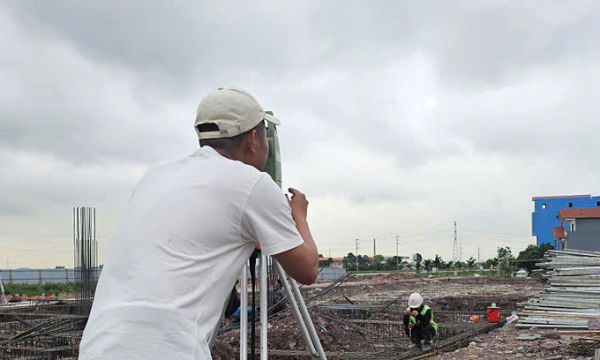
Quang Minh, 42, at a construction site in Bac Ninh Province, July 2026. Photo provided by subject. |
Wei-Jun Jean Yeung, director of the Centre for Family and Population Research at the National University of Singapore, attributes Vietnam’s delayed marriage trends to “compressed modernization,” where social and economic changes unfold much faster than in western nations.
“Societal advances haven’t aligned with traditional expectations placed on women to manage household duties,” she tells Read.
“When women become financially independent, marriage becomes optional, especially when the opportunity costs of becoming a wife and mother appear too high.”
She notes that soaring housing costs and the rise of “intensive parenting” standards are giving rise to two distinct groups of young adults: those actively choosing singlehood and those priced out of marriage despite wanting it.
Lan acknowledges that the “capstone” model allows individuals to enter marriage with greater autonomy and personal maturity, but cautions against setting it in stone, pointing out that financial stability can easily be achieved jointly after marriage.
Addressing delayed marriage requires more than mere moral encouragement, according to Yeung.
“Policy must create an environment where young people can form families without sacrificing too much.”
She says the solutions rest on five structural pillars: housing support, workplace gender equality, flexible work arrangements, long maternity leave, and good childcare networks.
Back in Hanoi, after sending his last email reply late at night, Dung switched off his device. Seeing the final bachelor in his friend group recently tie the knot has only heightened his impatience.
“I still dream of holding my child in my arms, and coming home after work to cook dinner and wash dishes with my wife,” Dung said. “I just don’t know when that dream will actually come true.”
Contact to : xlf550402@gmail.com
Copyright © boyuanhulian 2020 - 2023. All Right Reserved.