
Women Drive Pickleball’s Rise. Why Do Men Still Dominate MLP DreamBreakers?
Women's players are at the forefront of pickleball's rise. Even the sport's most popular player is a woman, the 19-year-old Anna Leigh Waters with 218k followers on Instagram, followed by the most popular men's player, Ben Johns, who has 186k followers. Yet, that seismic shift in the sport has not been fully reflected in Major League Pickleball (MLP), the professional pickleball league of the United States.
MLP's unique team format is built on parity. Every tie features men's doubles, women's doubles and two mixed doubles matches, ensuring equal participation for male and female players.
But when the tie culminates in the decisive DreamBreaker - the league's singles tiebreak format separating the winners and losers - male players often face each other in the decisive match.
In its short history, the MLP has become a widely popular league in pickleball. While it is known for smooth operations, clear results, and abolishing any chances of ambiguity in points distribution, one subtle thing in a highly open and modern sport continues to linger in the minds of players: favouring a men's match to decide the result, putting women in the shadows at the decisive moment.
Pickleball star Anna Bright raised her voice against this anomaly. She said the DreamBreakers, which offer delirious moments to fans and players, place significantly greater weight on men's singles players, creating a structural imbalance that influences both strategy and outcomes.
Why do men have a bigger impact in DreamBreakers?
A DreamBreaker is played as a rotating singles contest where teams change players every four points until one side reaches the maximum of 21 points to win the tie.
On paper, as per MLP mandates, each team needs to employ two men and two women in every tie. In practice, however, the order in which players are deployed often means men end up playing a larger share of the matches in the tie.
Not only does a DreamBreaker tend to see male players play more matches than women, it also gives more points to men than women. Supposedly, if a DreamBreaker ends 20-19, men account for roughly 60 per cent of the points played.
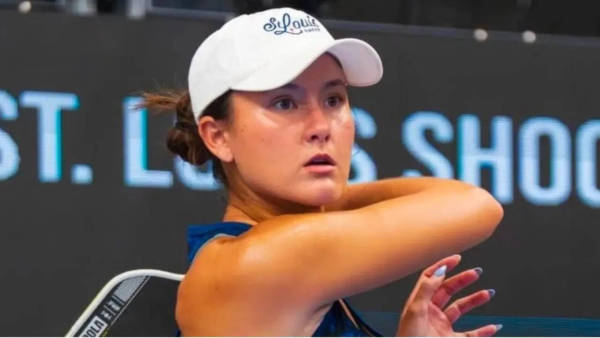
Anna Bright of St. Louis Shock is the most expensive player in the MLP history. Photo: Major League Pickleball
The reason for this disparity lies in the way teams approach ties. They tend to field their strongest men's singles players at the front of the lineup.
Explaining it, Bright said, "For DreamBreakers, you want your best players playing first because DreamBreakers are usually won at the first or second position." “For every team in MLP, your best absolute level singles players are men. Men simply play more than women in DreamBreakers.”
As a result, a format designed around equal representation ends up placing greater importance on male players once the tie reaches its pinnacle.
Neutral past
However, at the start of MLP, things were much different. DreamBreakers regularly saw men competing against women. Those matches produced some of the most memorable moments in the league's history.
Bright hailed those matchups. “They were incredible,” said Bright, citing some of the best moments, such as Lee Whitwell beating Dekel Bar and Yates Johnson. “The highlights from those points are unmatched, and I think a lot has been lost now that we hardly see this anymore.”
The last time the gender-neutral matches were played in the MLP was in 2023. But over time, a strategic shift has brought change. Teams often arrange their orders to ensure players face opponents of the same gender, and gradually, men facing men has become almost a ritual in DreamBreakers. While that approach may maximise competitive advantages, it has also reduced the number of cross-gender battles that once defined the format.
Bright differs with this strategy. “Men versus women is the ultimate pressure-ridden, anxiety-filled, David versus Goliath situation that you can really get in sports. It doesn’t really exist in pro sports, but it can exist in Major League Pickleball,” insisted Bright. “The league should encourage this to happen as much as possible. It’s the ultimate battle of the sexes. People still talk about the Bobby Riggs versus Billie Jean King match.”
What is the solution?
Bright offers a solution which she says is relatively easier to adapt within MLP's current structure.
The current system is relatively simple. The home team announces its DreamBreaker lineup first. The away team then sets its own order in response.
That process often leads to predictable line-ups featuring two men and as many women on both sides, preserving same-gender matchups throughout the contest.
Bright calls for a fundamental change in that approach. “My idea is to fundamentally change how home and away is approached. Instead of the home team announcing their lineup, they announce the matchups,” suggested the St. Louis Shock star. “And the other team will react by choosing the order of those four matchups.”
Under this system, teams would first determine who plays whom rather than the order in which players appear. Such a change, she hopes, would bring a much broader range of tactical possibilities for the teams.
How would it work?
Bright illustrated the concept using a recent DreamBreaker between the St. Louis Shock and the New Jersey 5s. Under the current format, lineup order largely dictates how the match unfolds, with teams often trying to engineer favourable same-gender matchups.
Under her proposed model, however, the New Jersey 5s could have created a completely different set of contests. Waters could face Hayden Patriquin. Noe Khlif could take on Bright, making MLP a completely unique gender-neutral league. Other combinations would also become possible depending on the strategic choices made by each side.
That would force teams to think differently while churning out the squad lineup in a tie.
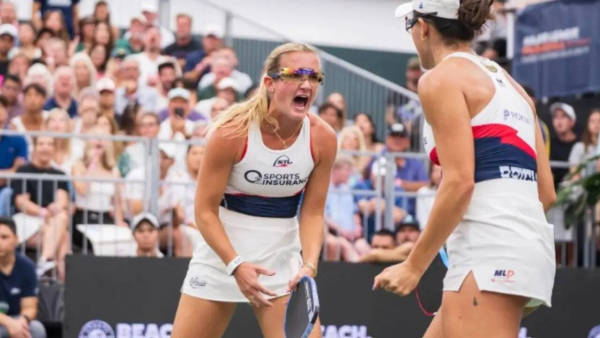
St. Louis Shock's Kate Fahey and Anna Bright celebrate after winning a point at MLP St. Petersburg. Photo: Major League Pickleball
The Shock, for example, would still likely place John Lucian Goins in a prominent position because of his singles ability. But the broader structure of the DreamBreaker would become less predictable and considerably more strategic.
“It’s a DreamBreaker that the people would absolutely love to see. We’d maximize the male versus female matchups, and DreamBreaker strategy would be totally different,” mentioned Bright. “This would change how currently women don’t matter as much. We would see a lot more women playing first, and we’d see men playing last. We’d see how people deal with the pressure of playing more often, or how they deal with the pressure of playing catch-up. Right now, teams can hide behind having good, but not great women more than you can hide behind having the same for your men.”
Why is this change significant?
While such gender-neutral matchups will raise the entertainment value of the ties, Bright says they would make women's representation in the league more recognisable, especially when the moment comes to separate the winners and losers.
For MLP to adopt this solution, it does not need to bring into effect any drastic changes. Neither scores, nor format, nor team rosters would require any changes. Instead, it would tweak the way teams use their players.
Bright is adamant about the changes and their benefits. “I think this is a win-win for the league because you’d see more male versus female matchups and more women playing first,” concluded Bright. “It would be an unsolved meta, more strategy, more head games, and more game theory, which is always super interesting.”
Whether MLP eventually embraces the idea remains to be seen. But as the league continues to evolve, Bright's proposal has reignited an important question: Can DreamBreakers become more strategically nuanced while also giving women a greater role in deciding matches when it matters most?
Contact to : xlf550402@gmail.com
Copyright © boyuanhulian 2020 - 2023. All Right Reserved.