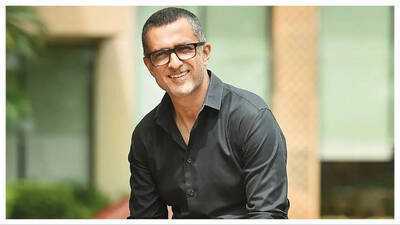
Sanjay Suri: I may not have a `100-crore film, but I've been part of films that have stood the test of time
Joining the TV show Juhi Mui marks a full-circle moment for Sanjay Suri . Having begun his career on television in 1997 before moving to films, the show’s socially relevant theme and limited commitment made it an appealing proposition. He says, “I kept myself away from longer commitments. This was a month-long commitment, and we’ve kept the track open so I can return when required. In cinema too, I’ve mostly been part of socially relevant films. When this show was offered to me, I felt it was a good story and socially relevant too.”
Talking about returning to the medium after nearly three decades, he shares, “I hosted the travel show Indian Holiday nearly 30 years ago followed by Yehi Toh Pyar Hai as the lead. Then Pyaar Mein Kabhi Kabhi happened, followed by films and producing, and life took another trajectory. So, this is like my ghar wapsi after 30 years.”
Sanjay believes the distinctions between television, films, and OTT are increasingly becoming irrelevant. He says, “You’ve got to remain platform-agnostic and do the work you want to do, especially at this stage of my career. Earlier too, it wasn’t that I didn’t want to take up a TV show. I simply couldn’t commit to one or two years because I was focusing on films.”
The actor dismisses the belief that film actors turn to television only when opportunities elsewhere become scarce. He says, “That could be someone’s perception. Even back in the day, I sat at home for two years and didn’t do anything. I’ve just had a release with Imtiaz Ali ’s Main Vaapas Aaunga , have an upcoming OTT show, and will dabble in short films. If you look at the 27 years I’ve been active since 1999, I may not have a `100-crore film to my credit, but I’ve been fortunate to be part of some wonderful films that have stood the test of time. My aspirations have never been driven by panic or visibility.”
Over time, Sanjay stopped measuring success by mainstream benchmarks and focused instead on work that aligned with his creative instincts. He shares, “I was never offered a buffet of films. It was always, ‘Okay, he does this alternate kind of cinema,’ and maybe that forms a perception. I did a commercial film, Tera Jadoo Chal Gayaa, which was Abhishek Bachchan ’s second film, but my experience was that everything revolved around one person. In those days, cinema was very hero-driven. Either you’re the lead, or you’re reduced to nothing. I said, ‘Okay, I’ll play on my T20 ground.’ I don’t mind being a brick in the wall, but if you take that brick out, it should make an impact. Even when I turned producer, it wasn’t from the point of view of making money. It was about telling stories. I Am became one of the largest crowdfunded films in the country and went on to win a National Award. That was great gratification for everyone involved.”
Talking about returning to the medium after nearly three decades, he shares, “I hosted the travel show Indian Holiday nearly 30 years ago followed by Yehi Toh Pyar Hai as the lead. Then Pyaar Mein Kabhi Kabhi happened, followed by films and producing, and life took another trajectory. So, this is like my ghar wapsi after 30 years.”
Sanjay believes the distinctions between television, films, and OTT are increasingly becoming irrelevant. He says, “You’ve got to remain platform-agnostic and do the work you want to do, especially at this stage of my career. Earlier too, it wasn’t that I didn’t want to take up a TV show. I simply couldn’t commit to one or two years because I was focusing on films.”
The actor dismisses the belief that film actors turn to television only when opportunities elsewhere become scarce. He says, “That could be someone’s perception. Even back in the day, I sat at home for two years and didn’t do anything. I’ve just had a release with Imtiaz Ali ’s Main Vaapas Aaunga , have an upcoming OTT show, and will dabble in short films. If you look at the 27 years I’ve been active since 1999, I may not have a `100-crore film to my credit, but I’ve been fortunate to be part of some wonderful films that have stood the test of time. My aspirations have never been driven by panic or visibility.”
Over time, Sanjay stopped measuring success by mainstream benchmarks and focused instead on work that aligned with his creative instincts. He shares, “I was never offered a buffet of films. It was always, ‘Okay, he does this alternate kind of cinema,’ and maybe that forms a perception. I did a commercial film, Tera Jadoo Chal Gayaa, which was Abhishek Bachchan ’s second film, but my experience was that everything revolved around one person. In those days, cinema was very hero-driven. Either you’re the lead, or you’re reduced to nothing. I said, ‘Okay, I’ll play on my T20 ground.’ I don’t mind being a brick in the wall, but if you take that brick out, it should make an impact. Even when I turned producer, it wasn’t from the point of view of making money. It was about telling stories. I Am became one of the largest crowdfunded films in the country and went on to win a National Award. That was great gratification for everyone involved.”
Contact to : xlf550402@gmail.com
Copyright © boyuanhulian 2020 - 2023. All Right Reserved.