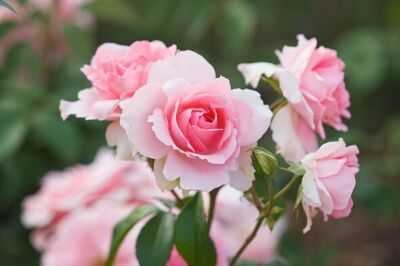
Now is a great time to turn your focus to your garden roses, with the worst of the winter mostly behind us, and the soil starting to warm up. Plants, including roses, are starting to put out more and more fresh growth. This all makes April a perfect time to concentrate on rose care, from planting to feeding and much more.
Planting new rosesContainer-grown and containerised roses are the perfect way to add these striking blooms to your garden this time of year. Bare-root roses are generally planted during the dormant season of late autumn to early spring instead. The best position will be a sunny, open site, with rich and moisture-retentive but well-draining soil. Roses don't like to be too cramped, so make sure there's plenty of space around them to maintain air circulation. Also, make sure you don't plant a rose in a position that has been used for roses before, to avoid the spread of disease.
For classic blooms on long stems, look to hybrid teas, whilst floribundas will provide flowers on generous clusters. A fuller look and striking fragrance can be found with shrub and English roses, whilst romance at height can be provided by climbers and ramblers on walls, arches, and fences.
Feeding and MulchingFeeding can make a big difference in roses, and by doing so now, your display could really benefit for the year. Scatter a rose fertiliser or balanced granular feed around the base, and make sure to keep the plant watered through dry spells. Then, you can add a thick mulch of well-rotted compost or manure. This will help to trap moisture in the soil, keep weeds suppressed, and can gradually improve the soil too. Just make sure to keep it clear of the stems to avoid rot. Later in the year, repeat-flowering roses can benefit from an additional feed, once the first flush has finished. Deadheading can also encourage more blooms as well.
 Pruning and training
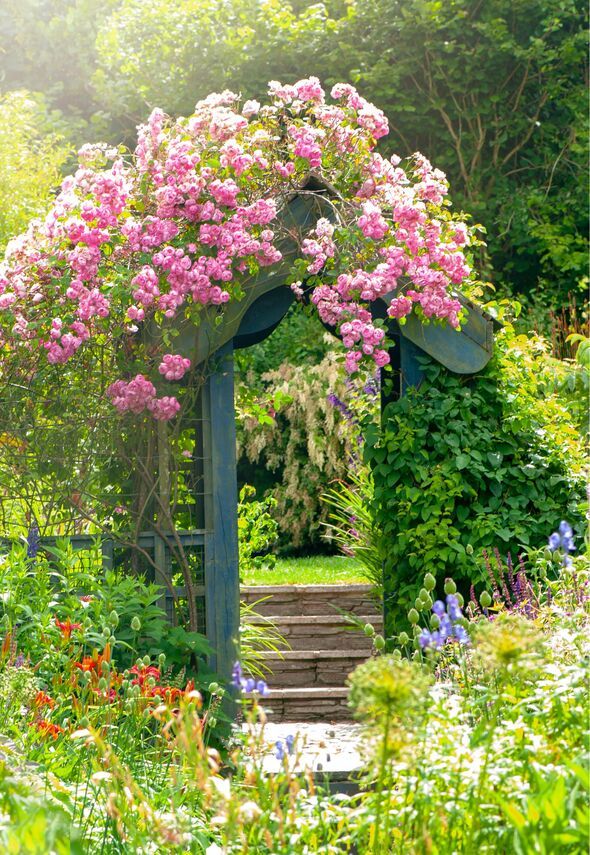
 In most gardens, the main pruning should be done by now, although cooler areas may still be catching up if growth has only recently started. Bush roses like hybrid teas and floribundas respond well to a firmer cut, whilst shrub and English roses prefer a lighter touch to avoid leafier growth. Climbers are trained onto their supports with side shoots shortened, whilst ramblers should typically be pruned once flowering finishes in summer. From late spring onwards, the focus should predominantly be on pruning and tying in fresh growth, watering well in dry weather, and deadheading.
Stay ahead of black spotMost rose growers will want to avoid black spot, and this month is a good opportunity to get ahead of it. Clear away any fallen leaves, remove affected growth, and make sure to avoid drenching the foliage when you're watering. Keep the plants open in the centre for free airflow. Keeping your roses well-fed and suitably watered will make them more resilient. Start well now, and your roses will reward you for months. Learn all this and more about roses on my YouTube channel, @daviddomoney.
Focus Plant - Prunus (flowering cherry)At this point in the year, flowering cherries really make themselves known. As the garden is still waking up, they burst into bloom with clouds of pink or white blossom, adding an instant charm and magic. Even small varieties can give a true sense that spring is here.
If you want to add one to your garden now, choose a container-grown tree, giving it a sunny, sheltered spot, with well-drained soil. Water it in thoroughly, then keep it well-watered through dry spells in its first year. A mulch around the base after planting will also help at moisture retention and to smother weeds.
An ideal position for them would be sheltered, to avoid stronger winds from ending the blossom display early. Pruning should be kept to a minimum, and before cutting, always check for nesting birds, and work should wait if a nest is in use. Simply remove any damaged, dead, or awkwardly placed branches after flowering finishes.
There are plenty of lovely varieties, suited to a range of gardens and requirements. 'Kanzan' is a popular choice, with rich double flowers and a broader shape to make a big impact. For smaller spaces, Prunus incisa 'Kojo-no-mai' is a lovely compact type, or for a limited-width space, 'Amanogawa' is a wonderful pencil variety.
To learn more about flowering cherries, watch the new episode 12 of Step-by-Step Gardening, filmed at Blue Diamond's Bridgemere Show Gardens, on my YouTube channel, @daviddomoney.
Fun fact: In Japan, flowering cherries are a deeply woven part of spring tradition. The custom of 'hanami', or blossom viewing, celebrates their brief yet stunning display.
Gardening Jobs1. Now is an ideal time to establish a simple cane grid for peas and climbing beans. A few canes with string or netting between them offers young shoots something to grab onto as they grow. It's easier to do this now, rather than later and trying to weave supports around plants once they're already climbing.
2. If you have garden pots standing in saucers, make sure there is plenty of gravel in the base, so it sits just above any drained water. This is particularly helpful in wet spells and ensures the pot's drainage holes are kept clear.
3. April is an ideal time to sow courgettes indoors to give them a good head start. Sow one seed per small pot of peat-free compost and keep them somewhere bright and frost-free. Once the risk of frost has passed, they can be hardened off and planted out in the garden.
4. Keep an eye on strawberry flowers after cold nights, as frost can damage the centres and impact the crop. Remove any spoiled flowers you spot and keep some fleece handy if chilly nights are forecast. Lift the fleece during the day, so give pollinating insects easy access.
5. While growth is still soft and flexible, make sure to tie in climbing plants. Plants like honeysuckle, clematis and climbing roses will all see the benefit from doing so now. A few loose ties at this stage can prevent wind damage, keep plants tidier, and help you to control where growth goes.
Facebook - https://www.facebook.com/DavidDomoneyTV
Instagram - https://www.instagram.com/daviddomoney/
Pinterest - https://www.pinterest.co.uk/daviddomoney/overview/
TikTok - https://www.tiktok.com/@daviddomoney
Did you know?Strawberries are a surprisingly rich source of vitamin C. A standard portion can rival or even exceed the amount of vitamin C in the average orange. They also provide fibre, folate, and manganese.
Forget-me-nots have a long history of being linked to love and remembrance. Their name is rooted in medieval language and legend, and the flower still appears in remembrance symbols and keepsakes, from Victorian tokens to modern dementia-awareness campaigns.
Hawthorn has a lovely place in folklore, with crowns being plaited and left out for angels and fairies to dance around and bless people. This suits its old role as a sacred May tree tied to fertility, protection and May Day customs across Britain.
The buttercup test really does have a physics twist. The petals reflect yellow light so strongly, thanks to their glossy structure, that they can cast that familiar golden glow under the chin.
Contact to : xlf550402@gmail.com
Copyright © boyuanhulian 2020 - 2023. All Right Reserved.