Smartphones have become an essential part of our daily lives, staying with us almost everywhere we go. However, accidents can happen at any time—one of the most common being a phone slipping into water. Whether it falls into a sink, gets soaked in rain, or drops into a pool, water exposure can be alarming.
The good news is that acting quickly and correctly can significantly improve your chances of saving your device. Instead of panicking, follow these practical and effective steps to minimize damage and protect your phone.
Why Immediate Action MattersWhen a phone comes into contact with water, its internal components are at risk of short-circuiting. Moisture can seep into delicate circuits and cause permanent damage if not handled properly. The first few minutes after exposure are crucial, and taking the right steps can make a big difference.
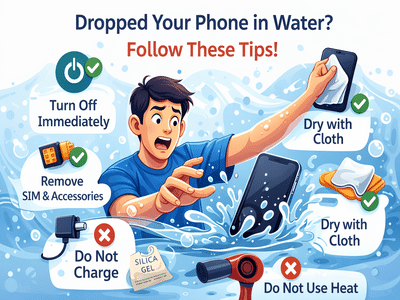
1. Turn Off Your Phone ImmediatelyAs soon as your device gets wet, switch it off without delay. Keeping the phone powered on increases the risk of a short circuit, which can permanently damage internal hardware. Even if the phone seems to be working fine, turning it off is the safest option.
2. Remove All External ComponentsTake out the SIM card, memory card, and any removable accessories. If your phone has a protective case or cover, remove that as well. This helps improve airflow and prevents moisture from being trapped inside the device.
3. Avoid Charging the DeviceOne of the biggest mistakes people make is plugging in a wet phone to check if it still works. This can be extremely dangerous and may cause further internal damage or even electrical hazards. Always ensure your phone is completely dry before attempting to charge it.
4. Do Not Press Buttons RepeatedlyPressing buttons can push water deeper into the phone’s internal components. Try to handle the device as little as possible and avoid unnecessary movements. Keeping it still reduces the risk of spreading moisture inside.
5. Dry the Exterior CarefullyUse a clean, dry, and soft cloth—preferably cotton—to gently wipe the phone. Pay special attention to ports, edges, and the screen. Make sure there is no visible moisture left on the surface.
Additional Tips to Improve Recovery- Place the phone in a well-ventilated area to air dry naturally
- Avoid using heat sources like hair dryers, as excessive heat can damage internal parts
- If available, keep the phone in a container with silica gel packets to absorb moisture
If your phone does not turn on after drying or shows signs of malfunction—such as screen flickering or audio issues—it’s best to visit an authorized service center. Attempting to open or repair the device yourself may void the warranty or worsen the damage.
Final ThoughtsWater damage can be stressful, but it doesn’t always mean your phone is beyond repair. Acting quickly and following the right precautions can significantly increase the chances of recovery. By staying calm and taking these simple steps, you can protect your device and potentially save yourself from costly repairs or replacements.
Contact to : xlf550402@gmail.com
Copyright © boyuanhulian 2020 - 2023. All Right Reserved.