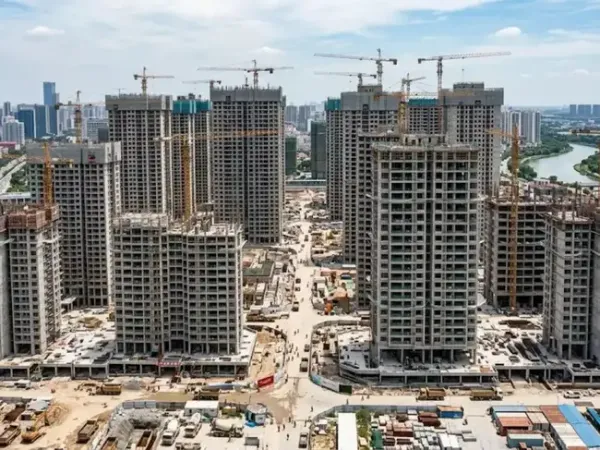
A sharp rise in global crude oil prices over the past two months is raising concerns in India’s real estate sector, not for immediate input shocks but for its indirect impact on construction costs through fuel, logistics and related inputs.
Brent crude has climbed from $70-75 per barrel in early February to over $105 in recent weeks, driven by escalating tensions in West Asia.
While core construction materials such as steel and cement have remained stable, developers said indirect cost pressures linked to fuel and logistics could build up if elevated crude prices persist.
“The recent geopolitical developments and volatility in global energy markets are creating some near-term supply-side adjustments for the real estate and construction sector in India,” said Niranjan Hiranandani, chairman of developers’ body NAREDCO. “We are seeing selective pressures around logistics costs and certain raw materials such as steel, cement, aluminium and PVC products, along with intermittent supply constraints in segments like tiles manufacturing.”
He added that the industry has navigated similar cycles earlier and remains well positioned to adapt through efficient sourcing and cost management. If current conditions persist, input and logistics costs may edge up, though developers expect timelines and deliveries to remain on track.
Aluminium prices have risen 6-10% in recent weeks due to reduced imports from the Gulf and higher global prices amid the West Asia conflict. Steel prices have also increased on the back of higher energy, gas and logistics costs, pushing up façade and finishing expenses for developers.
“If crude remains elevated, the ripple effect through logistics and fuel-linked inputs will become visible, particularly across transportation, material handling and petrochemical-linked products,” said Samyag M Shah, director, Marathon Nextgen Realty. “While there is no immediate disruption right now, sustained levels could gradually push up project costs, prompting most players to revisit cost assumptions and pricing strategies.”
Fuel and logistics account for an estimated 8-12% of construction costs, with diesel prices influencing raw material transportation and on-site machinery operations. Higher crude prices typically lead to increased freight rates, affecting delivery costs for cement, aggregates and finishing materials.
Industry executives said the impact is usually lagged, becoming visible over one to two quarters.
“It’s not the first-order impact of crude, but the cascading effect through logistics and petrochemical-linked inputs like pipes, cables and fittings that developers are watching closely,” said an industry analyst.
Developers may have to choose between absorbing higher costs to sustain sales momentum or passing them on to buyers, particularly in price-sensitive segments.
Most large developers are currently in a wait-and-watch mode, with no immediate changes to pricing.
“Unless crude sustains at these levels or moves higher, it’s unlikely to trigger a sharp reaction. But if it does, cost assumptions for new launches may need recalibration,” said another industry executive.
The extent of the impact will depend on how long crude prices remain elevated. A short-term spike may have limited effect, but a prolonged period of high prices could gradually increase construction costs.
Brent crude has climbed from $70-75 per barrel in early February to over $105 in recent weeks, driven by escalating tensions in West Asia.
While core construction materials such as steel and cement have remained stable, developers said indirect cost pressures linked to fuel and logistics could build up if elevated crude prices persist.
“The recent geopolitical developments and volatility in global energy markets are creating some near-term supply-side adjustments for the real estate and construction sector in India,” said Niranjan Hiranandani, chairman of developers’ body NAREDCO. “We are seeing selective pressures around logistics costs and certain raw materials such as steel, cement, aluminium and PVC products, along with intermittent supply constraints in segments like tiles manufacturing.”
He added that the industry has navigated similar cycles earlier and remains well positioned to adapt through efficient sourcing and cost management. If current conditions persist, input and logistics costs may edge up, though developers expect timelines and deliveries to remain on track.
Aluminium prices have risen 6-10% in recent weeks due to reduced imports from the Gulf and higher global prices amid the West Asia conflict. Steel prices have also increased on the back of higher energy, gas and logistics costs, pushing up façade and finishing expenses for developers.
“If crude remains elevated, the ripple effect through logistics and fuel-linked inputs will become visible, particularly across transportation, material handling and petrochemical-linked products,” said Samyag M Shah, director, Marathon Nextgen Realty. “While there is no immediate disruption right now, sustained levels could gradually push up project costs, prompting most players to revisit cost assumptions and pricing strategies.”
Fuel and logistics account for an estimated 8-12% of construction costs, with diesel prices influencing raw material transportation and on-site machinery operations. Higher crude prices typically lead to increased freight rates, affecting delivery costs for cement, aggregates and finishing materials.
Industry executives said the impact is usually lagged, becoming visible over one to two quarters.
“It’s not the first-order impact of crude, but the cascading effect through logistics and petrochemical-linked inputs like pipes, cables and fittings that developers are watching closely,” said an industry analyst.
Developers may have to choose between absorbing higher costs to sustain sales momentum or passing them on to buyers, particularly in price-sensitive segments.
Most large developers are currently in a wait-and-watch mode, with no immediate changes to pricing.
“Unless crude sustains at these levels or moves higher, it’s unlikely to trigger a sharp reaction. But if it does, cost assumptions for new launches may need recalibration,” said another industry executive.
The extent of the impact will depend on how long crude prices remain elevated. A short-term spike may have limited effect, but a prolonged period of high prices could gradually increase construction costs.
The country’s most definitive MSME stage returns on March 24 in New Delhi. Register now for the ET MSME Awards 2025